
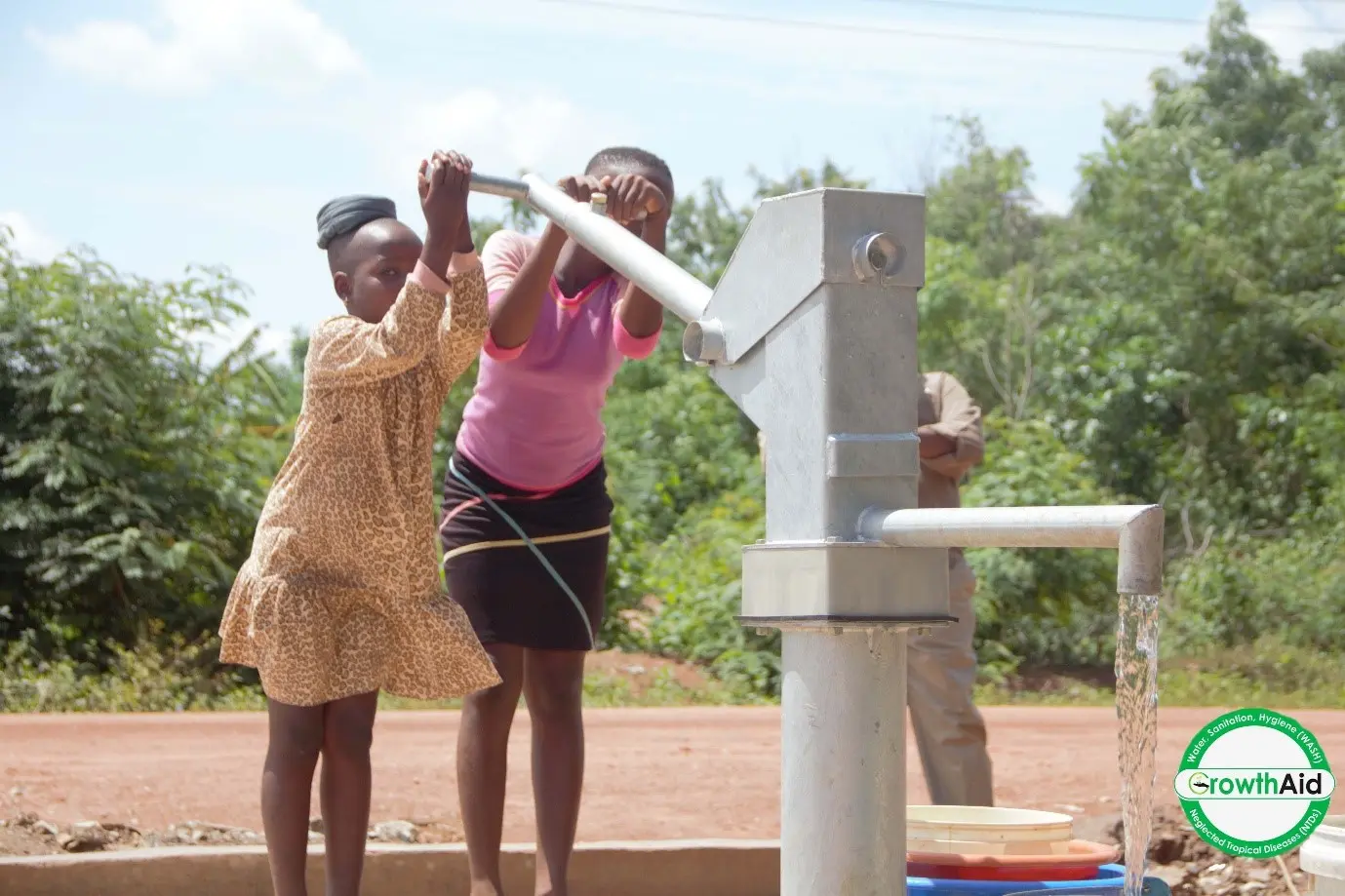














From Projects to Platforms
From Projects to Platforms: Investing in Climate-Resilient WASH at Scale How GrowthAid is Scaling Climate-Resilient WASH Through Investable Infrastructure For...
Read More →
When Water Flows, Hope Returns: The Story of Kpedze Anoe
When Water Flows, Hope Returns: The Story of Kpedze Anoe September 4, 2025 | Author: GrowthAid For nearly four decades,...
Read More →
Building Stronger Health Systems: GrowthAid Ghana and Atiwa West District Health Directorate unite to fight Neglected Tropical Diseases.
Building Stronger Health Systems: GrowthAid Ghana and Atiwa West District Health Directorate unite to fight Neglected Tropical Diseases. NTDs: Diseases...
Read More →
GrowthAid’s Pig Farming Initiative: Promoting Sustainable Livelihoods and Local Economic Growth in North Gonja
GrowthAid’s Pig Farming Initiative Promoting Sustainable Livelihoods and Local Economic Growth in North Gonja A Growing Opportunity in Ghana’s Agricultural...
Read More →
From Projects to Platforms
From Projects to Platforms: Investing in Climate-Resilient WASH at Scale How GrowthAid is Scaling Climate-Resilient WASH Through Investable Infrastructure For...
Read More →

Reviving the Keta Lagoon: GrowthAid Ghana’s Mission to Restore Ecosystems and Rebuild Livelihoods
The Keta Lagoon in Ghana’s Volta Region, a vital wetland supporting livelihoods and biodiversity, faces severe threats from mangrove loss,...
Read More →
GrowthAid’s Pig Farming Initiative: Promoting Sustainable Livelihoods and Local Economic Growth in North Gonja
GrowthAid’s Pig Farming Initiative Promoting Sustainable Livelihoods and Local Economic Growth in North Gonja A Growing Opportunity in Ghana’s Agricultural...
Read More →
From Projects to Platforms
From Projects to Platforms: Investing in Climate-Resilient WASH at Scale How GrowthAid is Scaling Climate-Resilient WASH Through Investable Infrastructure For...
Read More →
Reviving the Keta Lagoon: GrowthAid Ghana’s Mission to Restore Ecosystems and Rebuild Livelihoods
The Keta Lagoon in Ghana’s Volta Region, a vital wetland supporting livelihoods and biodiversity, faces severe threats from mangrove loss,...
Read More →
When Water Flows, Hope Returns: The Story of Kpedze Anoe
When Water Flows, Hope Returns: The Story of Kpedze Anoe September 4, 2025 | Author: GrowthAid For nearly four decades,...
Read More →
Building Stronger Health Systems: GrowthAid Ghana and Atiwa West District Health Directorate unite to fight Neglected Tropical Diseases.
Building Stronger Health Systems: GrowthAid Ghana and Atiwa West District Health Directorate unite to fight Neglected Tropical Diseases. NTDs: Diseases...
Read More →
Illegal Mining in Ghana: The Galamsey Crisis and Its Impact on Health, Livelihoods, and Sustainable Development
Illegal Mining in Ghana: The Galamsey Crisis and Its Impact on Health, Livelihoods, and Sustainable Development Illegal small-scale gold mining,...
Read More →
GrowthAid’s Pig Farming Initiative: Promoting Sustainable Livelihoods and Local Economic Growth in North Gonja
GrowthAid’s Pig Farming Initiative Promoting Sustainable Livelihoods and Local Economic Growth in North Gonja A Growing Opportunity in Ghana’s Agricultural...
Read More →
From Projects to Platforms
From Projects to Platforms: Investing in Climate-Resilient WASH at Scale How GrowthAid is Scaling Climate-Resilient WASH Through Investable Infrastructure For...
Read More →
Reviving the Keta Lagoon: GrowthAid Ghana’s Mission to Restore Ecosystems and Rebuild Livelihoods
The Keta Lagoon in Ghana’s Volta Region, a vital wetland supporting livelihoods and biodiversity, faces severe threats from mangrove loss,...
Read More →
When Water Flows, Hope Returns: The Story of Kpedze Anoe
When Water Flows, Hope Returns: The Story of Kpedze Anoe September 4, 2025 | Author: GrowthAid For nearly four decades,...
Read More →
Building Stronger Health Systems: GrowthAid Ghana and Atiwa West District Health Directorate unite to fight Neglected Tropical Diseases.
Building Stronger Health Systems: GrowthAid Ghana and Atiwa West District Health Directorate unite to fight Neglected Tropical Diseases. NTDs: Diseases...
Read More →
Illegal Mining in Ghana: The Galamsey Crisis and Its Impact on Health, Livelihoods, and Sustainable Development
Illegal Mining in Ghana: The Galamsey Crisis and Its Impact on Health, Livelihoods, and Sustainable Development Illegal small-scale gold mining,...
Read More →
GrowthAid’s Pig Farming Initiative: Promoting Sustainable Livelihoods and Local Economic Growth in North Gonja
GrowthAid’s Pig Farming Initiative Promoting Sustainable Livelihoods and Local Economic Growth in North Gonja A Growing Opportunity in Ghana’s Agricultural...
Read More →
From Projects to Platforms
From Projects to Platforms: Investing in Climate-Resilient WASH at Scale How GrowthAid is Scaling Climate-Resilient WASH Through Investable Infrastructure For...
Read More →
Reviving the Keta Lagoon: GrowthAid Ghana’s Mission to Restore Ecosystems and Rebuild Livelihoods
The Keta Lagoon in Ghana’s Volta Region, a vital wetland supporting livelihoods and biodiversity, faces severe threats from mangrove loss,...
Read More →
When Water Flows, Hope Returns: The Story of Kpedze Anoe
When Water Flows, Hope Returns: The Story of Kpedze Anoe September 4, 2025 | Author: GrowthAid For nearly four decades,...
Read More →
Building Stronger Health Systems: GrowthAid Ghana and Atiwa West District Health Directorate unite to fight Neglected Tropical Diseases.
Building Stronger Health Systems: GrowthAid Ghana and Atiwa West District Health Directorate unite to fight Neglected Tropical Diseases. NTDs: Diseases...
Read More →
Illegal Mining in Ghana: The Galamsey Crisis and Its Impact on Health, Livelihoods, and Sustainable Development
Illegal Mining in Ghana: The Galamsey Crisis and Its Impact on Health, Livelihoods, and Sustainable Development Illegal small-scale gold mining,...
Read More →